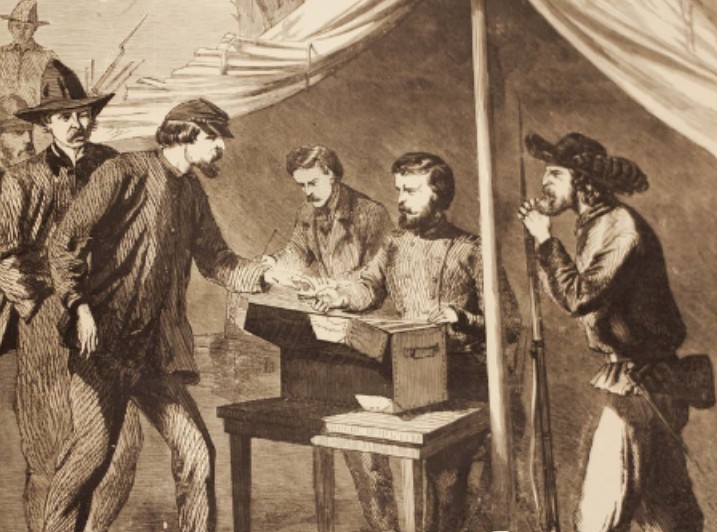
If you close your eyes and imagine standing in a noisy Civil War camp, you might picture jingling pockets and silver coins changing hands. In reality, those pockets were often shockingly light. One problem governments have always had with their coinage is the tendency for the populace to hoard it, especially if it is cast from precious metals. This is especially true during wars, and the Civil War period was no exception. People understood, instinctively, that gold and silver held value even when governments faltered. So, as economic instability gripped North and South alike, silver and gold coins quietly disappeared into mattresses, jars, and buried boxes.
The U.S. Mint tried to stay ahead of the panic. During the war years, it continued to produce coins, but they were made thinner, and the precious metals were diluted with cheaper alloys. But even these “watered-down” coins quickly vanished from circulation. The metal inside them was still worth more than their face value.
Copper Tokens
So what did people actually use when they had to buy bread, pay for a meal, or settle a small debt? With few coins in their pockets, Americans improvised. Postage stamps found their way into everyday transactions. If you owed someone ten cents, you might hand them a little, fragile packet of stamps instead of a coin. It was inconvenient, messy, and stamps were never meant to serve as money, but they were at least issued by the government and widely recognized. During the war, the government even printed glueless stamps for just this purpose.
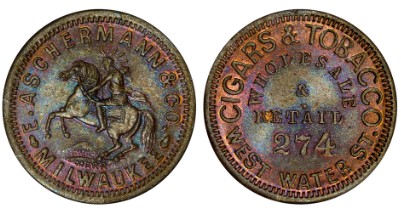
Then there were the copper tokens. Twenty-three states, along with private businesses such as general stores, factories, and sutlers (merchants who followed armies and sold goods to soldiers), began issuing their own small change. These tokens featured patriotic designs: flags, eagles, Union slogans, or portraits of Liberty. Others reflected local pride and popular sayings.
Of course, such a patchwork system couldn’t last forever. Tokens varied in size, weight, and credibility, and confusion was inevitable. Who accepted which token? Was that unfamiliar piece really worth a cent? By 1864, Congress had had enough. To restore order to everyday transactions, it banned private copper tokens, ending one of the more colorful, improvised chapters in American monetary history.
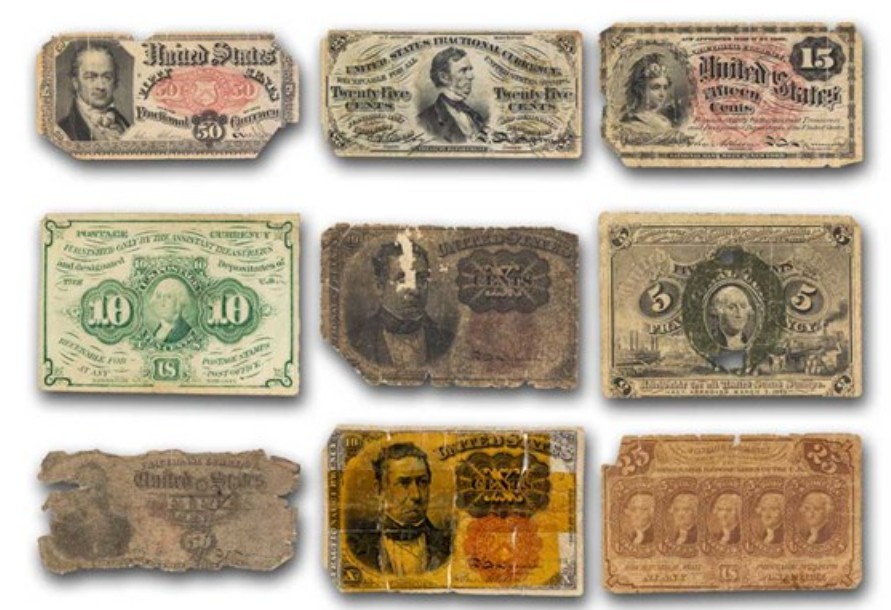
In the meantime, the Treasury tried another experiment: fractional currency. To address the small-change problem, it issued paper “coins” in denominations of five to fifty cents. These fractional dollars were essentially tiny banknotes meant to replace hard-to-find coins. They solved one problem—the lack of metal—but created another. They were easy to lose, awkward to handle in large quantities, and felt wrong to people used to the weight of metal. As a result, they never caught on.
However, not all coinage vanished. Among the small change still in circulation during the war were two intriguing pieces: the Indian Head penny and the three-cent piece, colloquially called the “fishscale.”
The Indian Head Penny
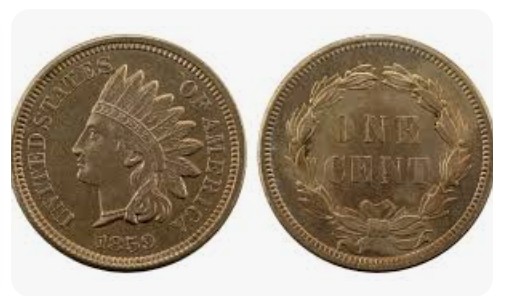
The Indian Head penny, minted from 1860 to 1864, was a workhorse coin for the Union. Cast from a mix of copper and nickel, these pennies were thinner than earlier cents and made from a bronze alloy of 88% copper and 12% nickel. The government used them mainly to pay Union soldiers. The Mint tripled production to keep up with demand. But human nature remained the same. These, too, were hoarded out of circulation.
The Three-Cent Piece
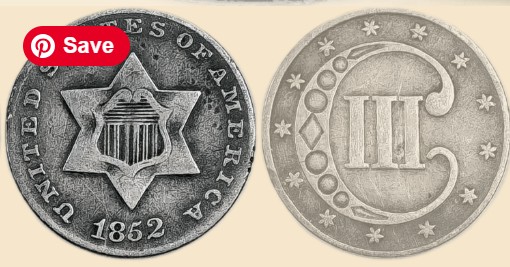
Then there was the three-cent piece—the tiniest coin the United States ever minted. Nicknamed the “fishscale” for its minuscule size, it was smaller and lighter than a dime, only about half an inch (14 mm) in diameter. When it first appeared in the 1850s, it made it easier for people to buy a three-cent postage stamp, the standard rate of the time.
The coin itself was an innovation. Created from an alloy of 75% silver and 25% copper, it was the first U.S. coin whose metal was deliberately worth less than its face value. That was meant to discourage hoarding and melting down. Even so, in the anxious climate of the Civil War, people clung to them.
The design of the fishscale was simple but distinctive. It had a six-pointed star on one side, a Roman numeral III on the other. Today, collectors often call it a “trime,” and holding one feels like holding a tiny secret from the past: a reminder of how far the government was willing to go to keep commerce moving.
Coins and War
Beyond these, the familiar silver coins still existed in theory: half dimes, dimes, quarters, half-dollars, and dollars. In practice, they were rare indeed. People trusted metal more than paper, and silver more than promises.
The coins, tokens, and notes of that era are more than just collectibles. They are quiet witnesses to a time when even a penny or a three-cent “fishscale” could tell you how frightened or hopeful the country really was.
Have you ever hoarded coins?
Discover more from American Civil War Voices
Subscribe to get the latest posts sent to your email.


Leave a comment